


Microbiota and anxiety: how your gut affects your mood
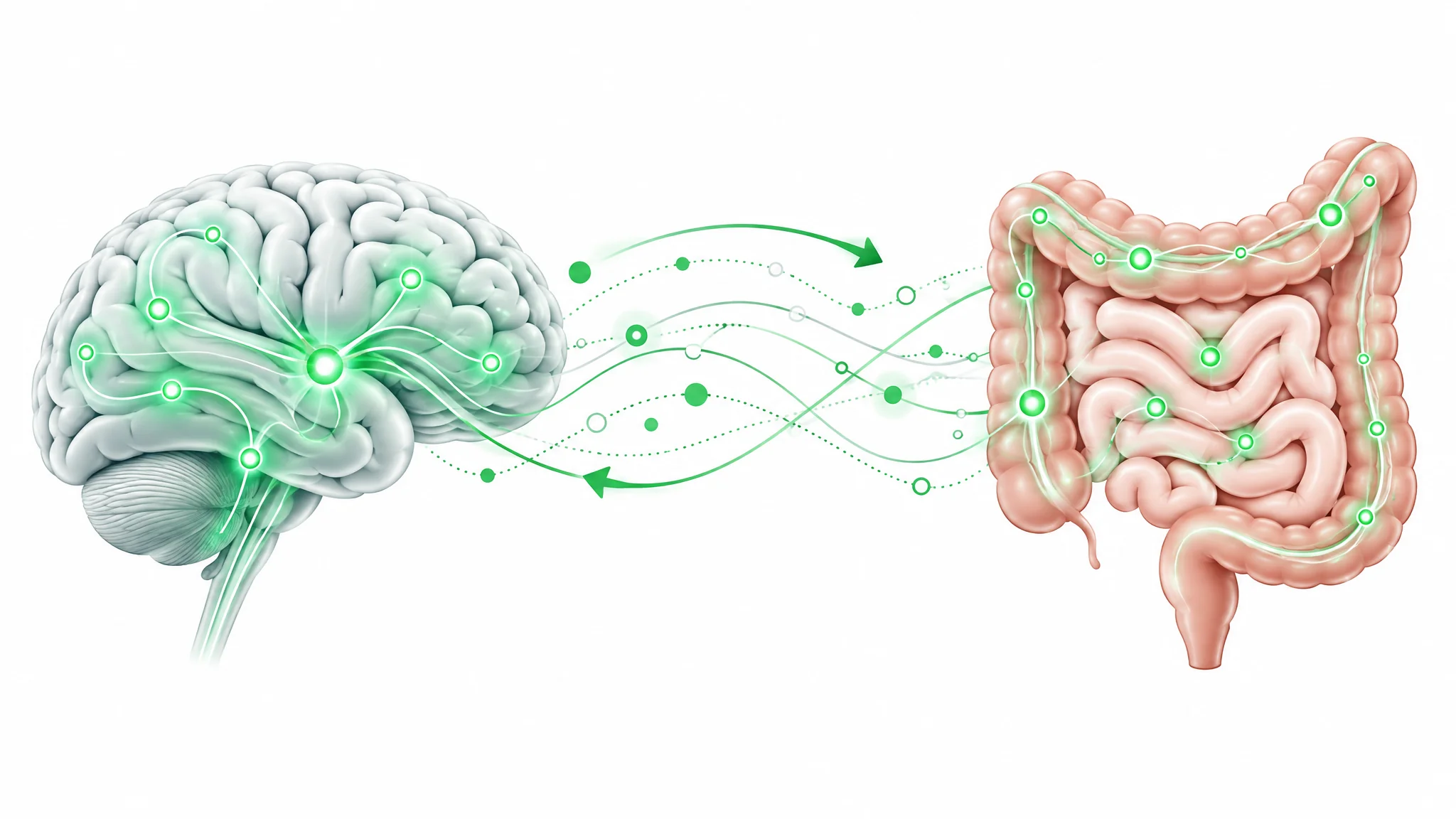
Have you ever noticed that when you're stressed your stomach hurts? Or that during periods of intense anxiety you have more digestive problems? It's no coincidence. Science confirms it: your gut and your brain are in constant conversation, and the gut microbiota plays a central role in that communication.
The gut-brain axis: the highway connecting digestion and emotions
The gut-brain axis is a bidirectional communication network that links the central nervous system with the enteric nervous system (the gut's "second brain"). This connection works through three main pathways:
- The vagus nerve: the most direct channel. It transmits signals from the gut to the brain in milliseconds.
- Endocrine pathway: the gut produces hormones and neurotransmitters that reach the brain through the bloodstream.
- Immune pathway: the microbiota regulates systemic inflammation, which directly affects the brain.
Most striking is the scale of the gut's role in mental health: more than 90% of the body's serotonin is produced in the gut, not the brain. Serotonin is the main neurotransmitter regulating mood, sleep and cognition.
The microbiota is not just a digestive player. It is a neuroendocrine organ that speaks directly to your brain.
How stress destroys your microbiota (and vice versa)
The relationship between stress and microbiota is a vicious cycle:
1. Stress alters the microbiota
When you experience chronic stress, your body activates the hypothalamic-pituitary-adrenal (HPA) axis, which triggers cortisol production. Cortisol has direct effects on the gut:
- It alters intestinal motility (diarrhea or constipation)
- It weakens the intestinal barrier (leaky gut)
- It reduces beneficial bacteria such as Lactobacillus and Bifidobacterium
- It increases pro-inflammatory bacteria
The result: gut dysbiosis. Less microbial diversity, fewer good bacteria, more inflammation.
2. Dysbiosis amplifies stress
An altered microbiota doesn't stay still. Through the vagus nerve and inflammatory molecules (lipopolysaccharides, cytokines), it sends signals to the brain that:
- Reactivate the HPA axis
- Reduce serotonin synthesis
- Divert tryptophan (the precursor of serotonin) toward the kynurenine pathway, associated with neuroinflammation
- Increase the perception of threat and anxiety
It's a self-reinforcing loop: more stress → more dysbiosis → more stress.
Signs your microbiota may be affecting your mood
It's not easy to know when the microbiota is behind your anxiety. But some patterns suggest it:
- Anxiety or irritability that worsens with digestive problems
- Bloating or abdominal discomfort in moments of tension
- Persistent mental fatigue with no apparent cause ("brain fog")
- Poor-quality sleep accompanied by intestinal problems
- Mood changes that correlate with what you eat
If you recognise several of these symptoms, the gut-brain axis deserves attention.
Which bacteria are most linked to anxiety
Scientific research has identified bacteria whose presence or absence correlates with mental wellbeing:
Protective bacteria (their deficit is associated with more anxiety):
- Lactobacillus rhamnosus — reduces cortisol and anxiety behaviours in clinical models
- Bifidobacterium longum — improves the response to acute stress
- Christensenella minuta — increases serotonin production (recent CSIC studies, 2024-2025)
Pro-inflammatory bacteria (their excess is associated with more anxiety):
- Clostridium — certain species
- Lipopolysaccharide (LPS)-producing bacteria
What you can do to care for your gut-brain axis
The good news: the gut-brain axis works in both directions. Just as stress damages the microbiota, improving the microbiota can reduce anxiety.
Nutrition
- Prebiotic fiber: artichoke, garlic, leek, oats. It feeds butyrate-producing bacteria, which protect the intestinal barrier.
- Fermented foods: natural yogurt, kefir, sauerkraut. They provide live beneficial bacteria.
- Tryptophan: eggs, legumes, pumpkin seeds. It is the precursor of serotonin that the gut needs to produce it.
- Reduce ultra-processed foods: sugar and additives impoverish microbial diversity.
Habits
- Restorative sleep: the gut follows circadian rhythms. Poor sleep directly alters the microbiota.
- Moderate exercise: it increases bacterial diversity and reduces cortisol.
- Stress management: mindfulness, diaphragmatic breathing — not as a fad, but because they activate the vagus nerve and curb the HPA axis.
Know your microbiota
Before making blind decisions, knowing which bacteria you have lets you act with precision. A microbiota analysis like VitalOme identifies your real bacterial composition: which genera you have, in what proportion, and how it compares with healthy people.
Knowing your microbiota is the first step to acting on your mental health from the gut.
What the science says (without exaggerations)
It's important to be honest: the science in this field is promising but still emerging in humans.
What we know solidly:
- The gut-brain axis is a well-established biological reality
- Chronic stress alters the microbiota (robust clinical evidence)
- Dysbiosis is associated with greater anxiety and depression in observational studies
- Certain probiotics (Lactobacillus, Bifidobacterium) show positive effects on stress in controlled trials
What is still being researched:
- Which specific bacterial combinations are most effective in humans
- Whether changes in the microbiota cause anxiety or are a consequence of it
- Standardised clinical protocols with psychobiotics
Conclusion: listen to your gut
If you feel anxiety, chronic stress or mood changes that don't fit your life situation, your microbiota may be part of the answer. Not the only part, but an important piece that is often ignored.
The gut is not just a digestive organ. It is a system that actively participates in how you feel, think and respond to the world.
Caring for your microbiota is caring for your mental health.
Scientific sources: Frontiers in Microbiology (2025), PubMed Central, CSIC (2024-2025), SciELO Colombia (2024), Scielo Venezuela (2025). This article is informative and does not replace professional medical advice.
Want to know the state of your gut microbiome?
Analyse your gut microbiome at home with VitalOme
Over 5,000 bacterial species analysed. Results in the app in 2 weeks. Free shipping in Spain.
Order my VitalOme kit — €249